SK hynix has announced that its 256GB DDR5 registered dual in-line memory module has completed Intel’s rigorous Data Center Certified compatibility verification process for deployment on Intel Xeon 6 platforms. The company characterizes this achievement as a pioneering milestone for modules of this density utilizing 32-gigabit “1b” process DRAM technology.
It bears emphasizing that we’re discussing registered memory modules here, the buffered architecture employed in enterprise servers and select workstation environments, rather than the unbuffered modules typical of consumer desktop systems. Intel’s Advanced Data Center Development Laboratory in the United States conducted the validation testing, lending considerable weight to the certification.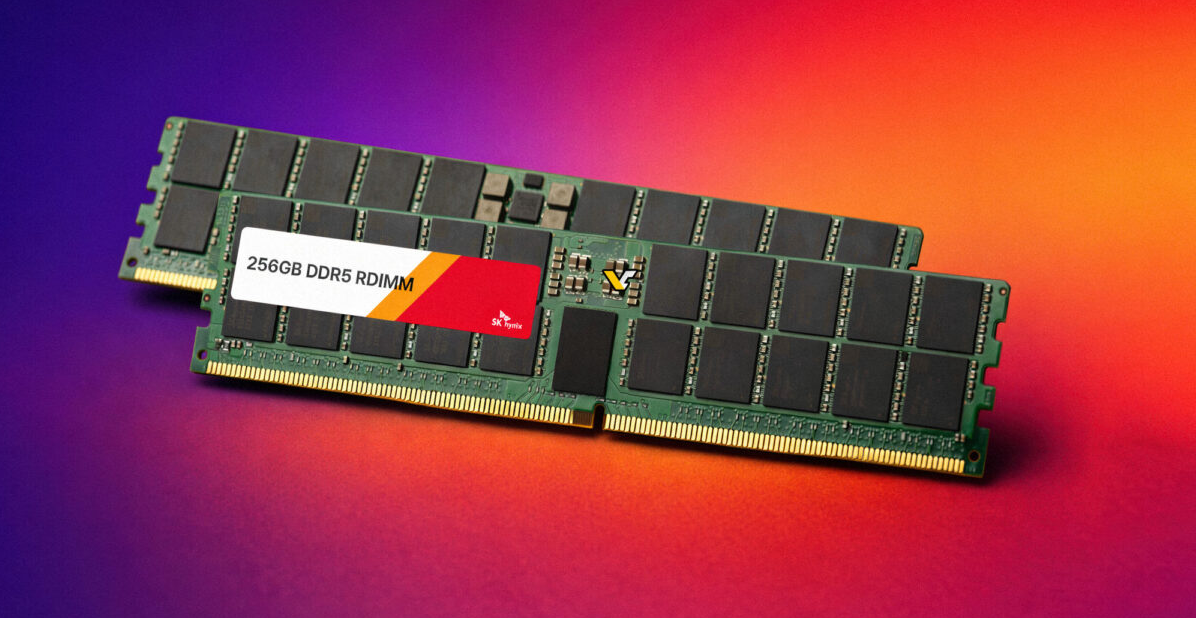
Interestingly, this isn’t SK hynix’s first successful qualification this year. The company had previously secured Intel’s approval for a 256GB DDR5 RDIMM configuration based on their earlier “1a” manufacturing process, utilizing 16-gigabit chips.
The company’s internal messaging strikes a decidedly confident tone, declaring themselves “proven to be the world’s best in high-capacity DDR5 module technology” and reaffirming their commitment as what they term a “full-stack AI memory creator” focused on meeting customer demands.
From a performance perspective, SK hynix presents some compelling metrics. Their engineers claim that servers equipped with these newer 32-gigabit-based 256GB modules demonstrate approximately 16 percent improvement in inference workload performance compared to systems running 128GB configurations built from the same 32-gigabit per chip. Perhaps more notably from an operational cost standpoint, they report a roughly 18 percent reduction in power consumption relative to current-generation 256GB RDIMMs constructed from 1a process 16-gigabit dies, achieved through a more streamlined single-chip architecture.
This development arrives against a backdrop of considerable market tension. DDR5 pricing continues its upward trajectory as DRAM supply remains constrained industry-wide. Original equipment manufacturers have already begun passing these costs along through higher memory upgrade pricing, and market analysts see little indication of near-term relief. While these 256GB enterprise modules fall well outside the consumer PC ecosystem, their successful certification underscores an important reality: demand in the data center segment shows no signs of moderating.
Read Also: G.Skill Launches a Statement About DDR5 Memory Price: Since Q4 2025
About The Author